
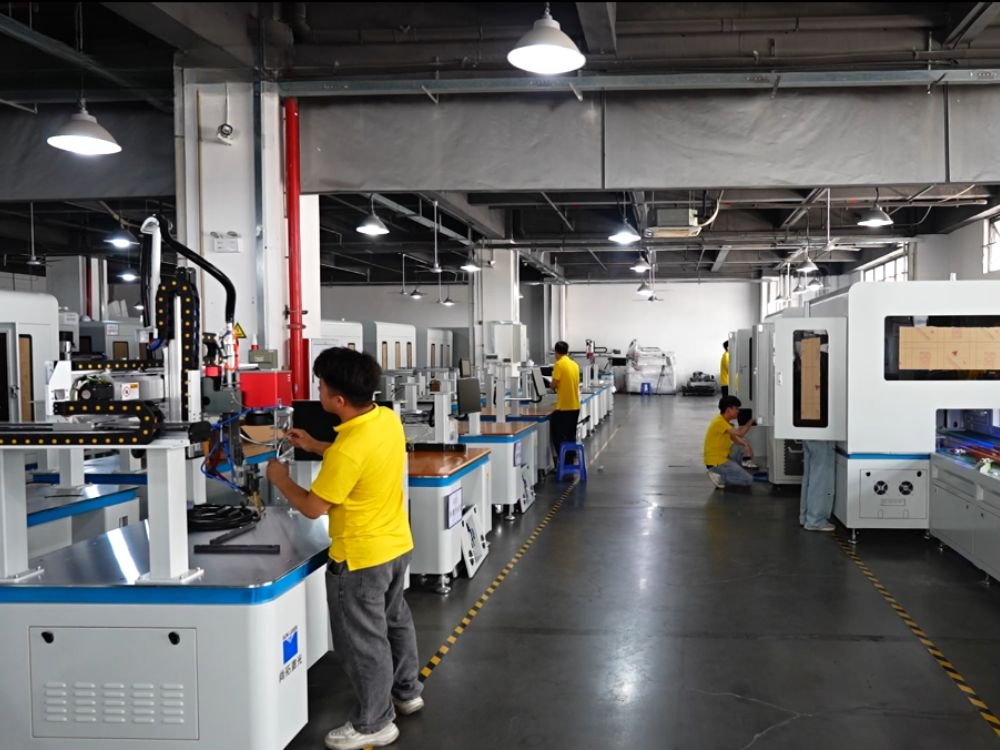
An electric vehicle battery pack contains more than battery cells. It also needs structural support, electrical connections, monitoring electronics, and thermal management co2mponents. A battery pack line brings these parts together through a controlled sequence of assembly and inspection operations.
Battery Cell, Module, and Pack: What Is the Difference?
Understanding these three terms helps define what a production line actually does.
- Battery cell: The individual electrochemical unit that stores electrical energy.
- Battery module: A group of cells assembled into an intermediate unit.
- Battery pack: The completed assembly, integrating cells or modules with the components needed for its intended application.
Cell manufacturing, module assembly, and pack assembly are distinct production stages. Equipment suppliers may provide them separately or combine several stages into a larger manufacturing system. Comau, for example, lists cell testing and formation, module assembly, pack assembly, and end-of-line testing as separate capabilities. Source: Comau
When discussing a “battery pack line,” buyers should therefore clarify whether the line starts with individual cells or with finished modules.
How Does a Battery Pack Line Work?
The exact workflow depends on the battery design. A line using finished modules has a different scope from one that also performs cell preparation and module assembly.
A representative module-based pack assembly process follows these stages.
1. Component Preparation
The required modules, enclosure, fasteners, wiring, and electronic components are prepared for assembly. Identification checks help ensure that the correct parts reach each station.
2. Enclosure and Thermal Interface Preparation
The battery housing is positioned for assembly. Where required by the design, thermal interface material is applied to support heat transfer between the battery components and the cooling structure.
3. Module Installation
Modules are placed into the enclosure and secured. Handling equipment and fixtures support positioning during assembly.
4. Electrical and Control Integration
Electrical connections, wiring, and the battery management system are installed according to the product design.
5. Cover Installation and Final Inspection
The enclosure is closed, and the completed pack proceeds to the specified inspections and end-of-line tests.
This general sequence is reflected in KUKA’s Webasto project, which combines module preparation, thermal paste application, housing assembly, battery management system installation, cover fastening, and final testing. Source: KUKA’s battery assembly case study
What Equipment Is Used in a Battery Pack Line?
A battery pack line is a coordinated system of workstations. Its equipment should match the product and the operations included in the project.
| Equipment category | Typical purpose |
|---|---|
| Conveyors and transport systems | Move packs and components between stations |
| Fixtures and positioning tools | Hold parts in the required assembly position |
| Robotic handling equipment | Transfer and position components |
| Dispensing equipment | Apply thermal interface materials or adhesives where required |
| Fastening equipment | Install and control threaded connections |
| Inspection and test equipment | Check specified assembly and product characteristics |
| Production data systems | Associate process records with individual products |
KUKA’s Webasto installation also demonstrates how transport and data collection support the assembly process: automated guided vehicles supply components, while recorded information includes fastening torques and electrical measurements. Source: KUKA
Manual, Semi-Automatic, or Fully Automatic?
These terms describe how work is divided between operators and machines.
A manual line relies mainly on operators using tools and fixtures. A semi-automatic line combines operator tasks with automated stations. A fully automatic line automates a larger share of handling, assembly, and inspection operations.
For a purchasing decision, the useful question is which tasks need automation and why. Review each proposed station against production volume, product variation, process consistency, maintenance needs, and investment limits.
Ask suppliers to explain how their proposed automation supports the required output and quality targets.
How Should You Specify a Battery Pack Line?
A clear specification makes supplier proposals easier to compare. Before requesting a quotation, define:
- Input condition: Individual cells, prepared modules, or partially assembled packs.
- Product range: Pack dimensions, weight, electrical architecture, and planned variants.
- Required output: Accepted packs per shift, with operating hours and downtime assumptions.
- Process scope: Which preparation, assembly, inspection, and testing operations are included.
- Quality records: Which measurements must be stored against each pack identifier.
- Changeover requirements: How the line should accommodate different products.
- Acceptance criteria: How performance will be demonstrated before and after installation.
Request a process flow, station list, capacity calculation, and acceptance plan alongside the equipment quotation. These documents turn “a battery pack line” into a defined production system that can be evaluated against your actual manufacturing needs.
Frequently Asked Questions
Does a battery pack line manufacture battery cells?
A pack assembly line generally works with existing cells or modules. Cell manufacturing must be explicitly included if it is part of the intended project.
Can one line handle different cell formats?
Suppliers offer solutions for cylindrical, prismatic, and pouch cells. However, compatibility with multiple formats must be confirmed for the specific line; it should not be assumed from the supplier’s overall capabilities. Source: Comau
How much does a battery pack line cost?
A meaningful quotation requires a defined product, production target, automation scope, and testing specification. Compare proposals against the same requirements so differences in price can be traced to differences in scope.